Smart Coupling: Add a Battery Without Losing Your Old Solar
Smart Coupling: How to Add a Battery Without Wasting Your Existing Solar
Got solar already and thinking about a battery? Your installer will usually offer one of two setups: AC coupling or DC coupling. There's a third option that gets the best of both, and it's called smart coupling.
Here's how each one works, and why smart coupling is often the smartest way to add a battery to an older solar system.
First, why you can't just plug a battery into your old inverter
Most older solar systems use an on-grid (string) inverter. It turns your panels' power into electricity your home can use, but it has no way to charge or run a battery. To add a battery, you need extra equipment. How that equipment connects is what "coupling" means.
Option 1: AC coupling
AC coupling keeps your old solar inverter and adds a battery with its own separate inverter. Both connect to your switchboard.
The upside: you keep your existing solar setup, and it's usually simple to install.
The catch: in a blackout, your old solar inverter is required to switch off for safety. So during an outage you're running on whatever is left in the battery, with no solar topping it up. On a long outage, the battery eventually runs flat, even on a sunny day.
Option 2: DC coupling
DC coupling replaces your old solar inverter with a new hybrid inverter that runs both your panels and your battery.
The upside: it's efficient, and your panels can keep charging the battery during a blackout.
The catch: your old inverter gets thrown out, even if it's still working. On larger or older systems, your existing panels may not suit the new inverter, which can mean extra cost or a smaller system.
Option 3: Smart coupling
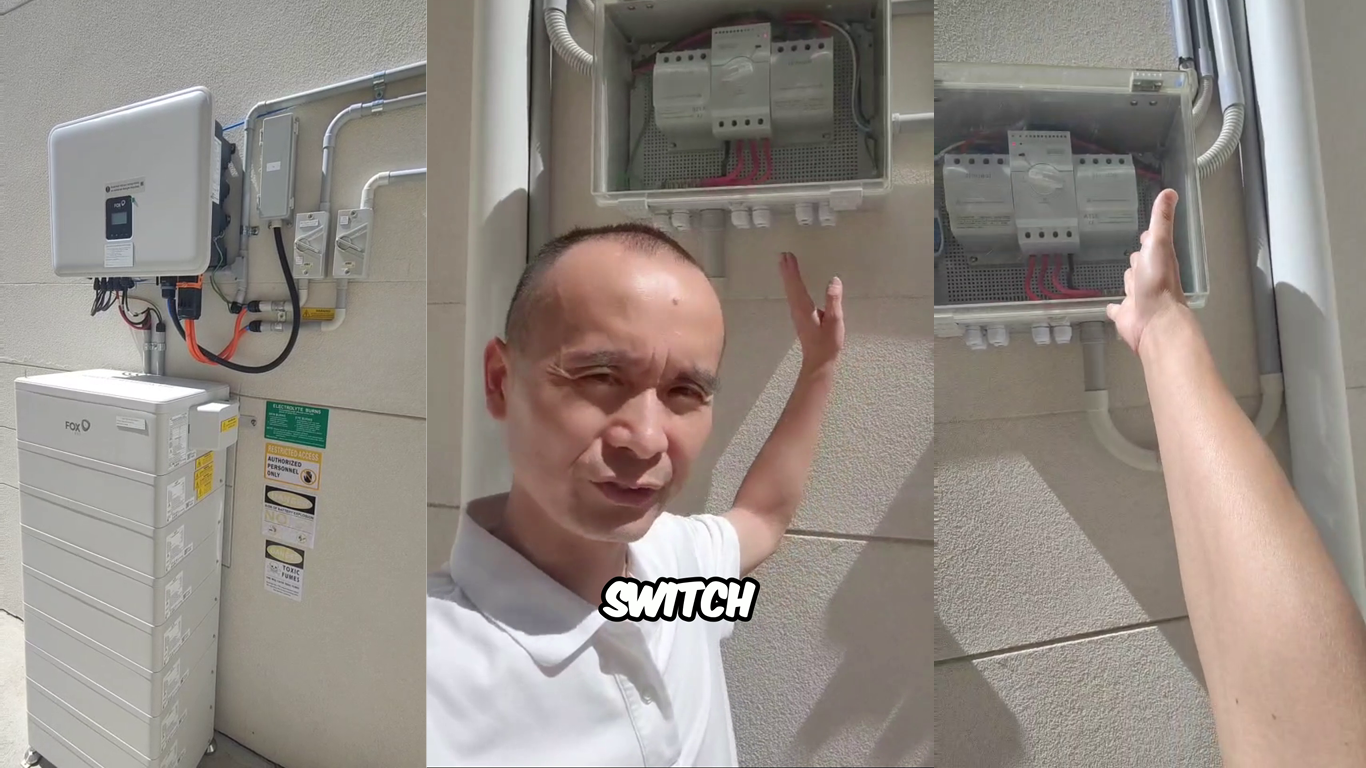
Smart coupling combines both. We install a new hybrid inverter and battery, and connect your existing solar inverter to the hybrid inverter's smart port, rather than straight to the grid.
That changes what happens in a blackout. When the grid goes down, the hybrid inverter creates its own mini grid for your home. Your old solar inverter sees that mini grid and keeps running. So both your old panels and any new panels keep powering your home and charging your battery, even during an outage.
When the battery is full and your home doesn't need more power, the hybrid inverter tells the old inverter to throttle back, so nothing is overloaded.
Why smart coupling makes sense for older solar
- Nothing goes to waste. Your existing panels and inverter stay in use, instead of being removed.
- More solar in a blackout. Your old panels keep charging the battery during outages, so your backup lasts longer.
- Room to grow. You can add new panels to the hybrid inverter while keeping the old ones.
- A bigger inverter where it counts. A hybrid inverter of 8kW or more lets you run more appliances at once, and soak up more of a free power window if your plan has one.
Is smart coupling right for your home?
It depends on your existing inverter, its age and condition, your switchboard and how much backup you want. Not every old inverter is suitable, so we check it at your free assessment before recommending the right setup.
Thinking about a battery for your existing solar? Call Aussie Solar Batteries on
1800 975 270, or send us a photo of your inverter and your latest power bill, and we'll tell you whether smart coupling suits your home.
Frequently asked questions
What is smart coupling?
Smart coupling connects your existing solar inverter to the smart port on a new hybrid inverter and battery. Your old panels keep working day to day and during blackouts, instead of being replaced or switching off.
What's the difference between AC coupling, DC coupling and smart coupling?
AC coupling keeps your old inverter and adds a separate battery inverter, but your old solar switches off in a blackout. DC coupling replaces your old inverter with a hybrid. Smart coupling keeps your old inverter and connects it through the hybrid, so it keeps running in a blackout too.
Will my old solar panels work in a blackout with smart coupling?
Yes. The hybrid inverter creates a mini grid for your home during an outage, so your existing solar inverter keeps producing power and charging the battery.
Do I need to replace my existing solar inverter?
Not with smart coupling, as long as your current inverter is in good working order and compatible. We check it at your free assessment.
Can I add more solar panels later?
Yes. New panels can connect to the hybrid inverter, while your existing panels stay on your old inverter.
Is smart coupling more expensive than AC or DC coupling?
It depends on your existing system and switchboard. Because you keep your current panels and inverter, it can cost less than replacing everything, while still giving you better blackout backup than standard AC coupling. We'll quote both options so you can compare.
How do I know if my home suits smart coupling?
Send us a photo of your current inverter's label and your latest power bill. We'll check its age, model and size, and tell you which setup suits your home best.