Why You Need An 8kW Inverter (And Why The Cheap Quotes Never Offer One)
The cheap battery quotes all come with a 5kW or 6kW inverter. Here's why that's costing you 9kWh of free power a day, in plain English.
You've got two battery quotes in front of you. Different brands. One's a few grand cheaper and the kWh number looks just as big.
Skip past the storage size. Find the line that says inverter.
It says 5kW. And here's the thing most people don't realise: on the cheap systems, nobody picked that. That's just as big as it goes.
Think of it like a water tank
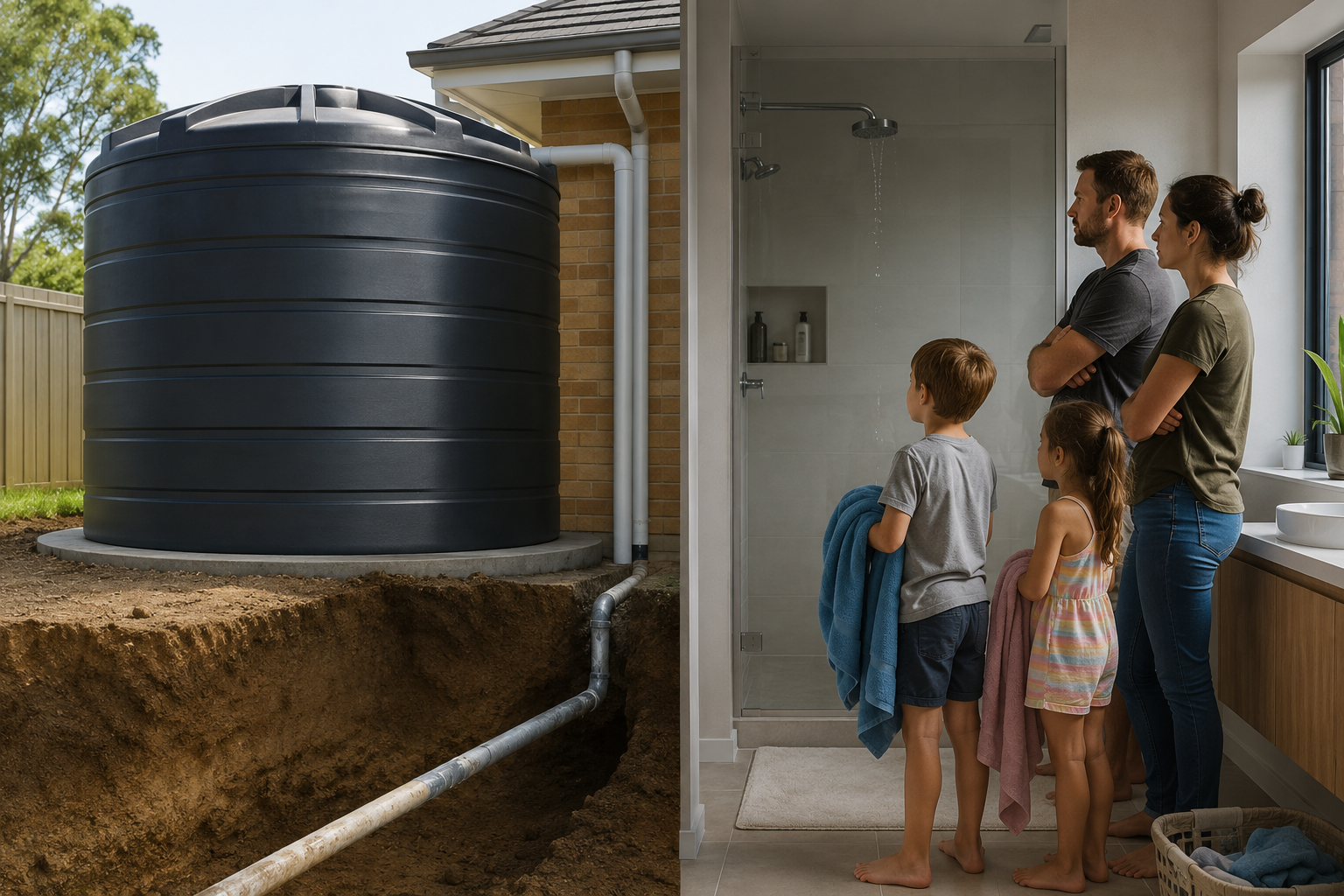
Your battery is the tank. Your inverter is the pipe coming out of it.
You can buy the biggest tank on the street. If the pipe's skinny, the water still dribbles out.
kWh is how much you've got stored. kW is how fast you're allowed to use it.
The cheap quotes shout about the first number and go real quiet about the second one. Once you spot it, you can't unsee it.
Free power has 3 hours only a daily limit. A 5kW inverter can't reach it.
From 1 July 2026, the government's Solar Sharer deal kicked in. If you're in NSW, SA or south east Queensland, your retailer has to offer at least one plan with three hours of free power every day. In NSW and south east Queensland it runs 11am to 2pm.
You can pull up to 24 kWh of free electricity in that window. Go past 24 kWh and you start paying again. Right. So let's do the maths.
- 8kW for 3 hours = 24 kWh. The lot.
- 6kW for 3 hours = 18 kWh. Six short.
- 5kW for 3 hours = 15 kWh. Nine short.
That's 9 kWh of free power a day you simply can't take. Not because you didn't qualify. Not because it was cloudy. Because your pipe's too skinny to fit it through.
Every day. For as long as you own the thing.
And if someone tells you the network won't let you have 8kW, they've got it backwards. Those limits are about how much you send out to the grid. Charging your battery is power coming in. Different rule.
So what does a 5kW inverter actually cost you?
Run the numbers on the 9 kWh a day you cannot take.
9 kWh short x 365 days x $0.40 per kWh x 10 years = $13,140.
That's thirteen grand of free electricity you paid for instead, so you could save a few thousand on the quote. And that assumes power prices never go up.
Here's the bit they won't mention
Have a look at what sizes these systems actually come in. On single phase, you'll usually find 3.6kW, 5kW, maybe 6kW. That's the whole list. There's no 8kW to upgrade to, because they don't make one.
So when the bloke on the phone tells you 5kW is plenty for your place, hear what he's actually saying. He's not sizing anything to your house. He's telling you how big his box gets.
And 6kW doesn't fix it either. Still 6 kWh short every day. Still won't carry your ducted system through a hot February arvo.
Now think about your aircon
A ducted system in a Sydney home will pull anywhere from 2 to 6 kW when it's working hard. Chuck in a split in the bedroom. Hot water heating up. Oven on. Pool pump. Car on the charger.
You're past 5kW before you've served dinner.
And here's what actually happens then. Your battery's sitting there at 90%, full of power, and your house quietly starts buying the difference off the grid at peak rates.
Full battery on the wall. Paying peak prices. That's the bit that stings.
Blackout's worse. The inverter just can't run what you thought it could.
Most Aussie homes these days have ducted aircon or a couple of splits. Which means most of us need more than 5kW. The 5kW unit isn't built for how we actually live. It's built to win quotes on price.
Nobody's ever wished for a smaller one
Serious question. Has anyone, ever, stood in their kitchen in a heatwave and thought "geez, I wish my inverter was smaller"?
You'll never regret going 8kW. There's a fair chance you'll regret 5kW, and you'll work it out on the hottest day of the year or on your first bill after you switch to a free power plan.
Going bigger costs you a bit now. Ripping out an undersized all-in-one later costs you the unit, the install, a new grid application and the days without power.
Four things to ask before you sign
- How many kW does the inverter actually put out? Not the battery size. The inverter.
- Does this range even do an 8kW single phase? If it doesn't, you're being sold a limit, not advice.
- How fast can it charge off the grid? Some of them charge slower than they discharge, which wrecks the 24 kWh maths.
- What happens if my ducted and my hot water go at once? Get the answer in kilowatts, not adjectives.
If the honest answer to number one is 5kW, you're not getting a cheaper battery. You're getting a smaller one for the same money.
Give
Aussie Solar Batteries a call
before you sign anything. We'll size it to what your house actually uses and what you actually pay, then show you the numbers side by side. No obligation.