Australia’s #1 Battery Installer in 2025: Why Scale, Not Hype, Won the Year
🏆
Australia’s #1 Battery Installer in 2025
In most fast-growing industries, leadership isn’t decided by who shouts the loudest — but by who delivers when demand peaks.
By that measure, Aussie Solar Batteries didn’t just participate in Australia’s residential energy storage boom in 2025. We led it.
As the year closed, Australia’s home and small commercial battery market surged to record levels. December alone saw more than 41,000 systems installed nationwide, with total installed capacity approaching 1.18 GWh. Average battery sizes climbed past 28 kWh, a clear signal that Australian households are no longer asking whether to install batteries but how much capacity they should secure.
Against this backdrop of rapid growth and tightening supply chains, Aussie Solar Batteries ranked #1 nationally for retail battery installations for two consecutive months, and #1 for cumulative installed capacity in the six months following the federal subsidy rollout. Not as a one-off spike but as a repeatable result.
When the Market Peaks, Systems Matter
The real test came in the final two months of 2025.
- November 2025: 26 MWh installed nationwide
- December 2025: 32.7 MWh installed — a 26% month-on-month increase
While overall national installations surged in December, our delivery volumes increased faster than the market itself. In NSW, which is the most competitive battery market in the country — our share climbed to 8.7%, even as industry-wide demand stretched installers to their limits.
That matters, because peak demand doesn’t reward ambition. It rewards preparation.
Subsidies Don’t Create Leaders — They Expose Them
The launch of the federal Cheaper Home Battery Subsidy in July 2025 accelerated demand nationwide. In just six months, more than 185,000 households added battery storage, representing over 4.2 GWh of new capacity.
But subsidies don’t lift all players evenly.
As volumes surged, the market quickly separated into two camps:
- Businesses that could sell batteries
- Businesses that could actually install them at scale
Inventory depth, multi-state logistics, accredited installers, compliance systems, and real-world delivery capacity became the true competitive edge. Many retailers discovered too late that marketing alone doesn’t install batteries.
Built for Delivery, Not Just Growth
Aussie Solar Batteries’ performance in 2025 was not accidental.
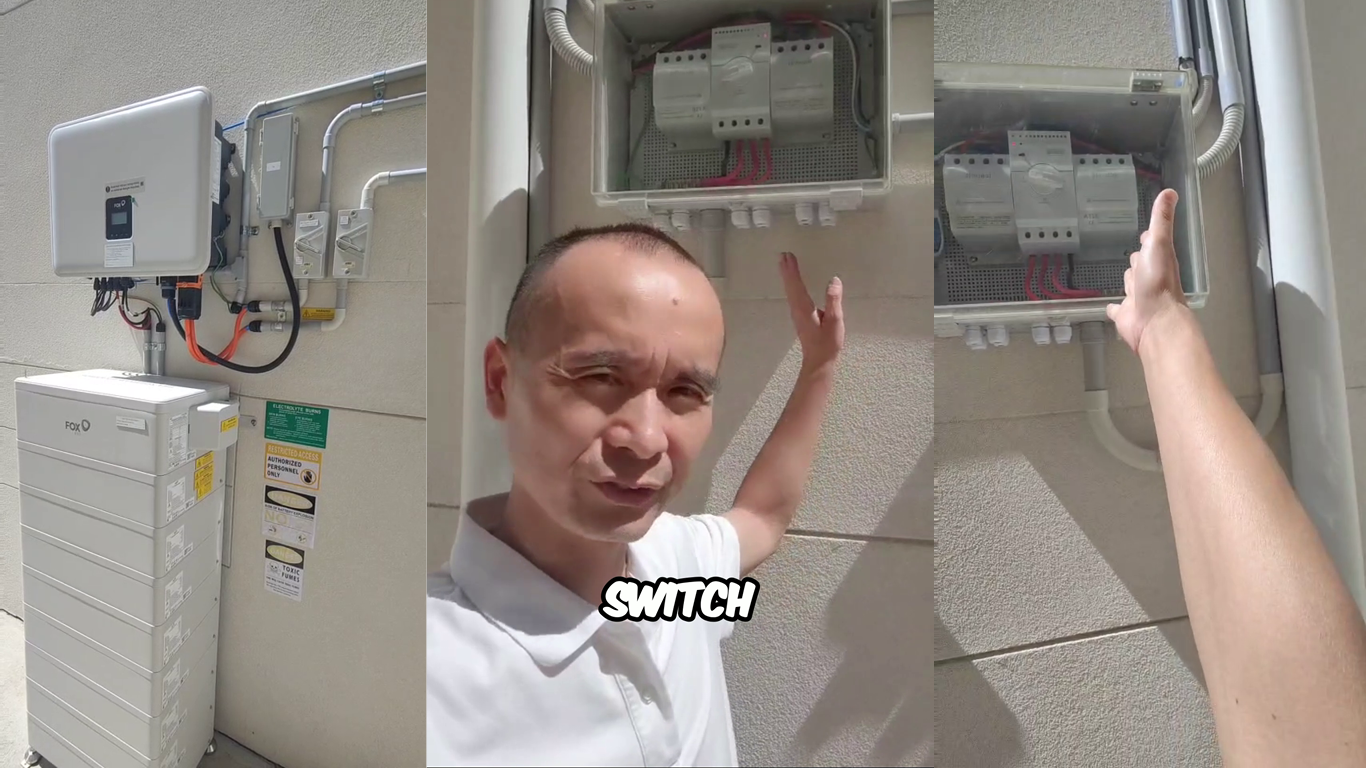
Our multi-state warehousing network, nationwide installation teams, and proven operational systems established across NSW, QLD, SA and beyond allowed us to maintain delivery certainty when others slowed or paused intake.
Our long-standing partnership with Fox ESS further ensured consistent access to premium battery systems during the tightest supply windows. The result: top-ranked installer performance for both retailer and battery brand in December.
In an industry where trust is built at the installation stage not the quote stage reliability became our strongest marketing asset.
Looking Ahead to 2026
With further federal subsidy adjustments expected after 1 May 2026, early indicators suggest demand will pull forward into Q1 2026, creating another surge cycle.
The lesson from 2025 is clear: the next phase of Australia’s battery market won’t be won on price alone. It will be won by installers who can scale without breaking delivery, maintain compliance under pressure, and continue installing when demand is at its highest.
The Bigger Picture
2025 wasn’t just a year of growth for home batteries. It was a structural turning point.
The industry shifted from fragmented competition to clear leadership — from promises to performance. Ranking as Australia’s #1 retail battery installer for consecutive months is not just a milestone for Aussie Solar Batteries. It’s proof that in a market under pressure, execution wins. And as Australia moves deeper into energy independence, that distinction will matter more than ever.